The morning alarm came way too early for me. “The bus leaves at 5 am tomorrow morning”, we were directed by our CEO (Chief Experience Officer of our G Adventure tour). I find it hard to get super excited at 5 am, but we were headed to go watch the sunrise over Uluru in the red center of Australia. I honestly had no idea what to expect.
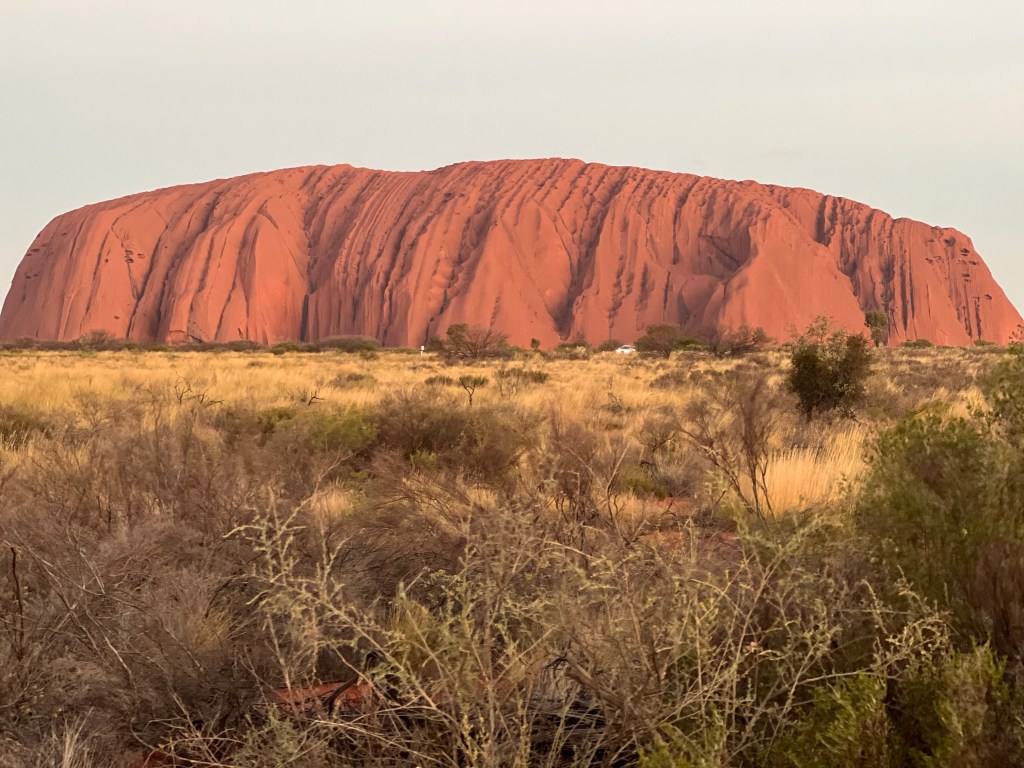
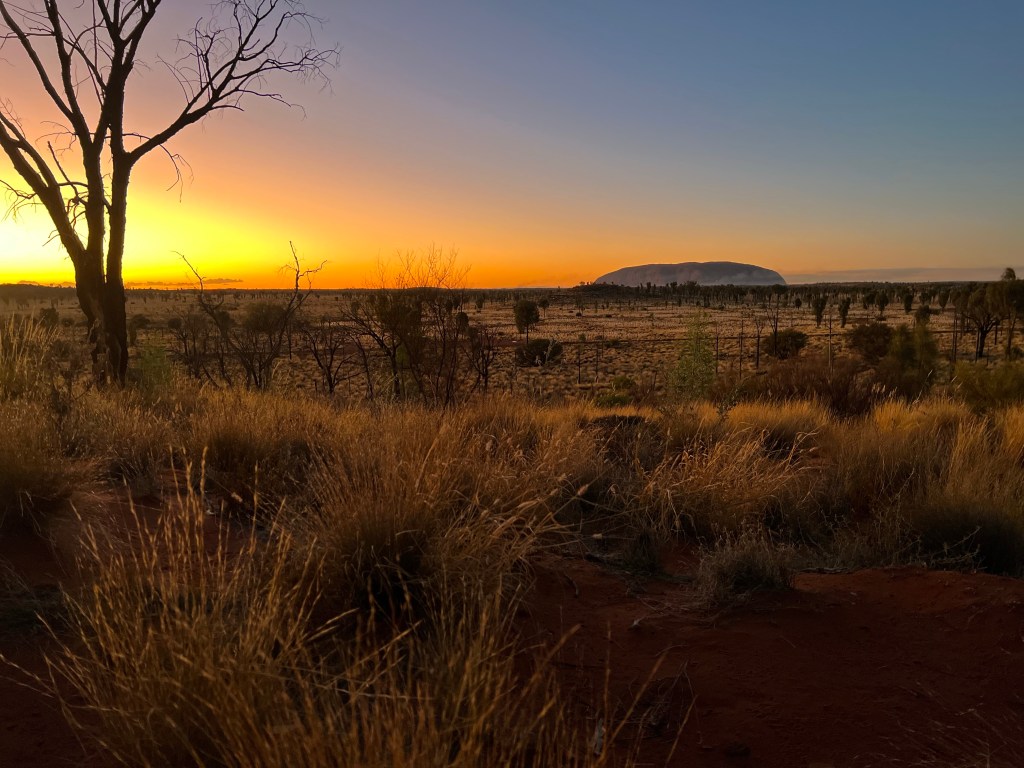
We had savored the sunset the evening prior, where with each handful of minutes, the shadows and colors changed over Uluru and across the spanning Australian Outback horizon. But our bus driver promised that this would be even more spectacular. As we drove, we could just barely make out hints of pink and yellow on the vast horizon. This was going to be special.
The land that we were travelling on is Aboriginal land, now Uluru-Kata Tjuta National Park. The traditional owners of the land, Anangu (Yankunytjatjara and Pitjantjatjara people), have been joint managing their land with the Federal Government (Parks Australia) since 1985 when the title deed to Uluru-Kata Tjuta land trust was handed back to them. Land that has been theirs since the beginning of time, where their ancestors have lived for over 30,000 years. We were being welcomed here today to look around and to learn: to understand Anangu, to respect their knowledge, and to open our minds and hearts to appreciate their enduring culture.
We had learned about Tjukurpa (pronounced ‘chook-orr-pa’), the foundation of their culture and why Uluru-Kata Tjuta is such a sacred place for Anangu. Tjukurpa is more than just our western views of laws and culture. Beyond being the traditional law that guides Anangu, Tjukurpa refers to the creation period when ancestral beings created the world. Tjukurpa provides answers to important questions, how to live and care for one another.
“Tjukurpa refers to the past, the present, and the future, at the same time. This knowledge never changes, it always stays the same”.
– Uluru-Kata Tjuta National Park Visitor Guide
As we exited the bus, small white lights lit up a visible short path, headed into blackness. We followed each other, one by one in our group until we came upon a rainbow of light sprinkled off in the distance. Field of Light.
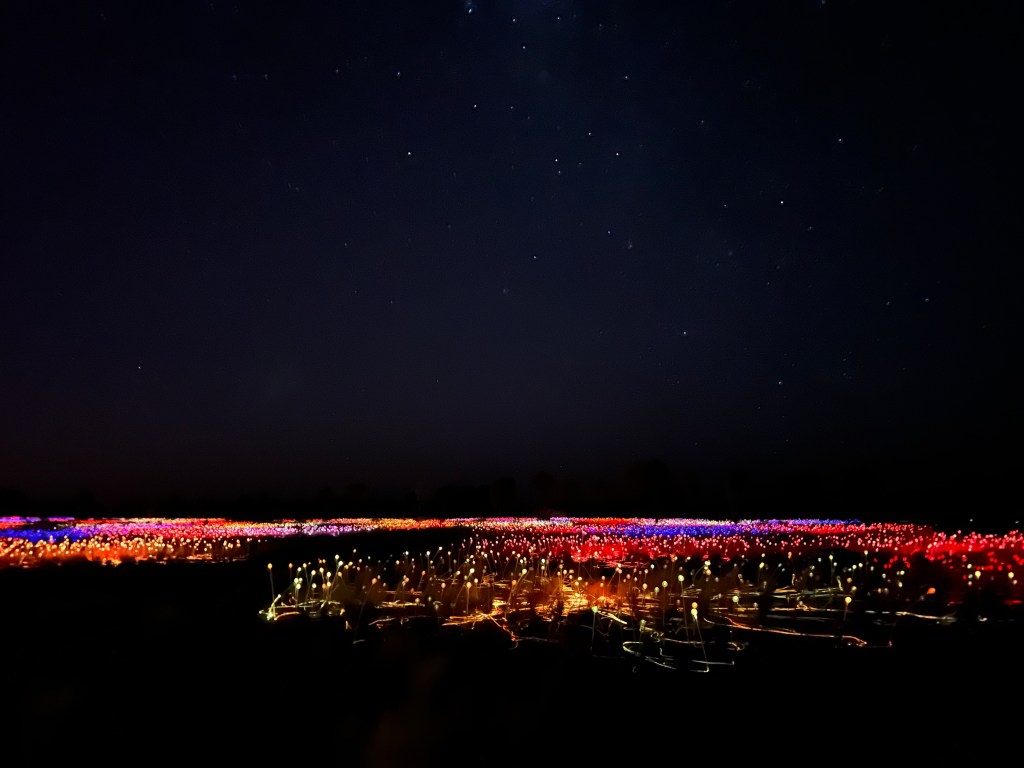
Artist Bruce Munro was inspired by a trip to Uluru in 1992 to create Field of Light, a collection of 50,000 interconnected, solar recyclable lights that now span over 7 football fields, like a sprawling garden of desert flowers in the darkness.
We were encouraged to take our time, slowly walking through Field of Light, and to absorb. As in a labyrinth, we meandered at our pace along the paths, not really sure where any path would take us. Each path was dark, lit up only by small white lights on the side, bordered by the brilliance of ever-changing reds, greens, and violets.
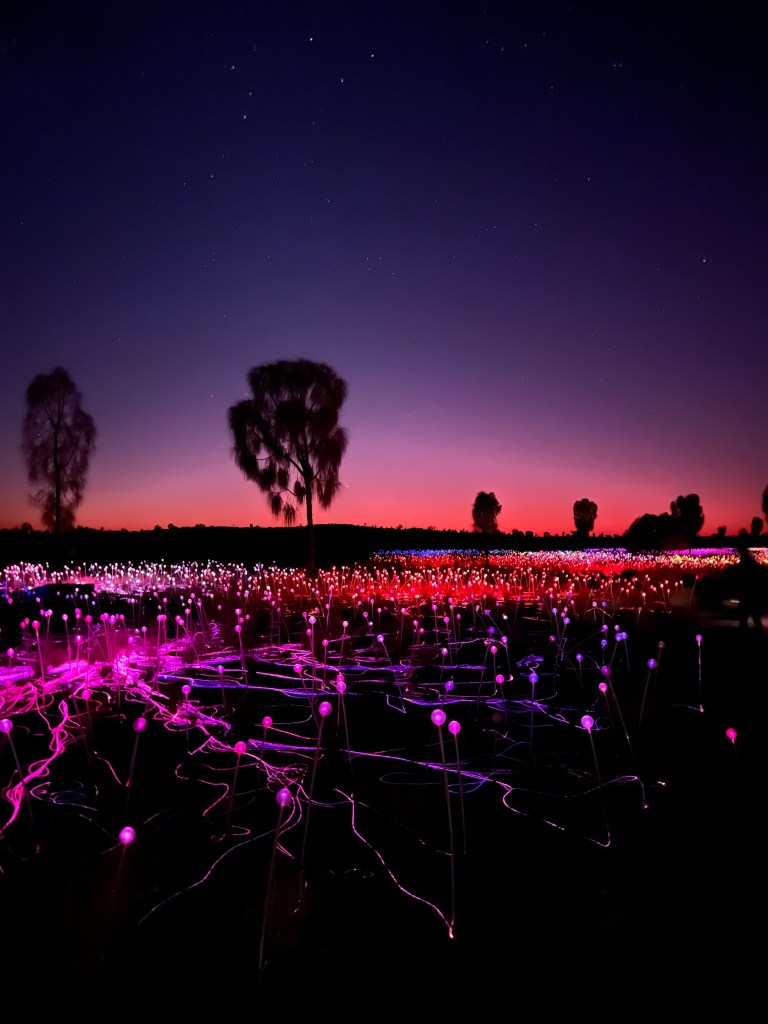
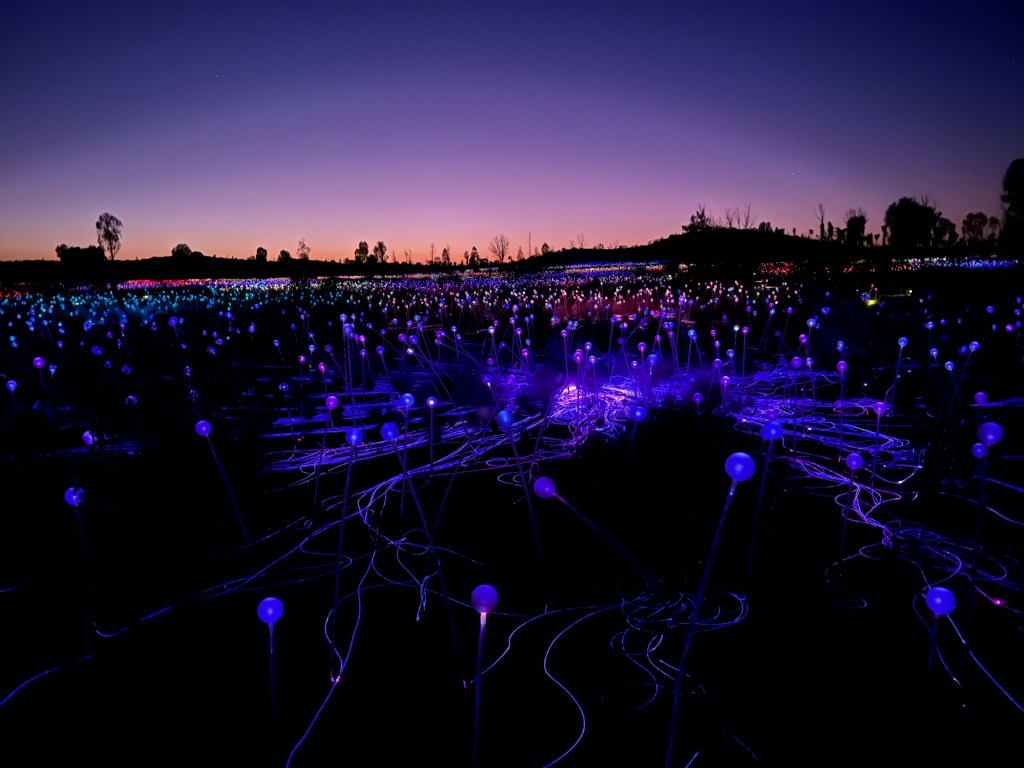
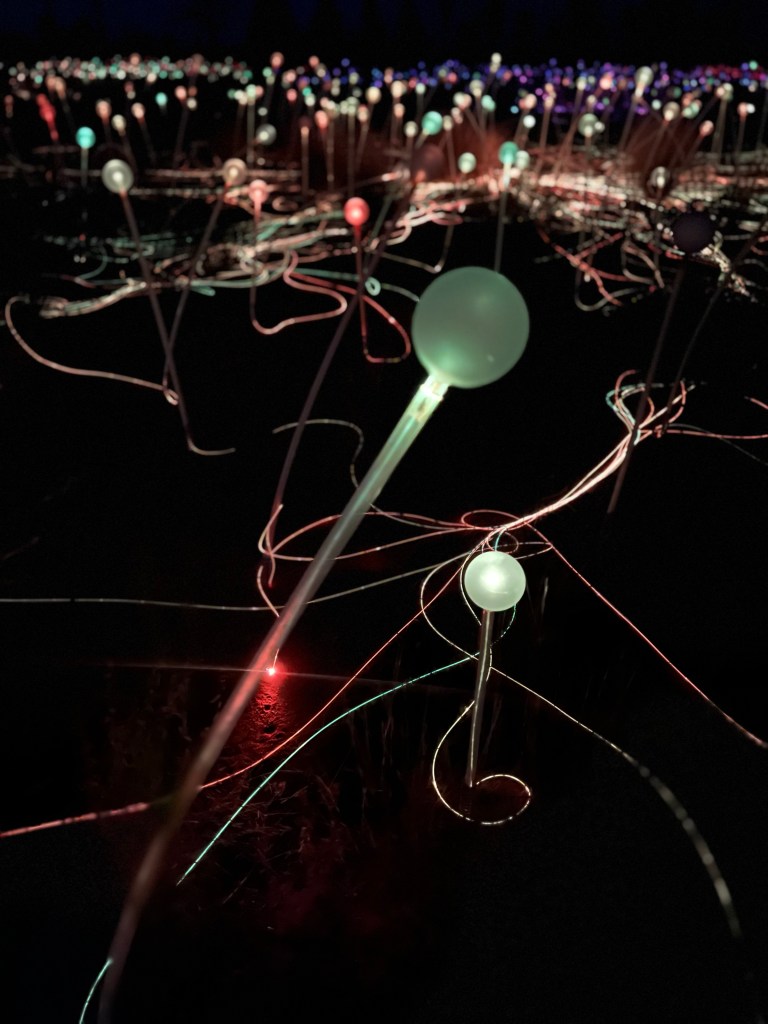
As I wandered and reflected, I could feel that each viewing of Field of Light was unique, as each light changed second by second. In contrast, Uluru, having been here for hundreds of millions of years, stood quiet and resilient somewhere in the distance. As we traveled the paths, we could see more and more, glorious pinks and purples on the horizon, a sign of the sun’s arrival. But little by little, the 50,000 solar lights, were starting to lose their energy and brilliance. They would be dim soon until the blazing Australian sun would charge their cells once again.
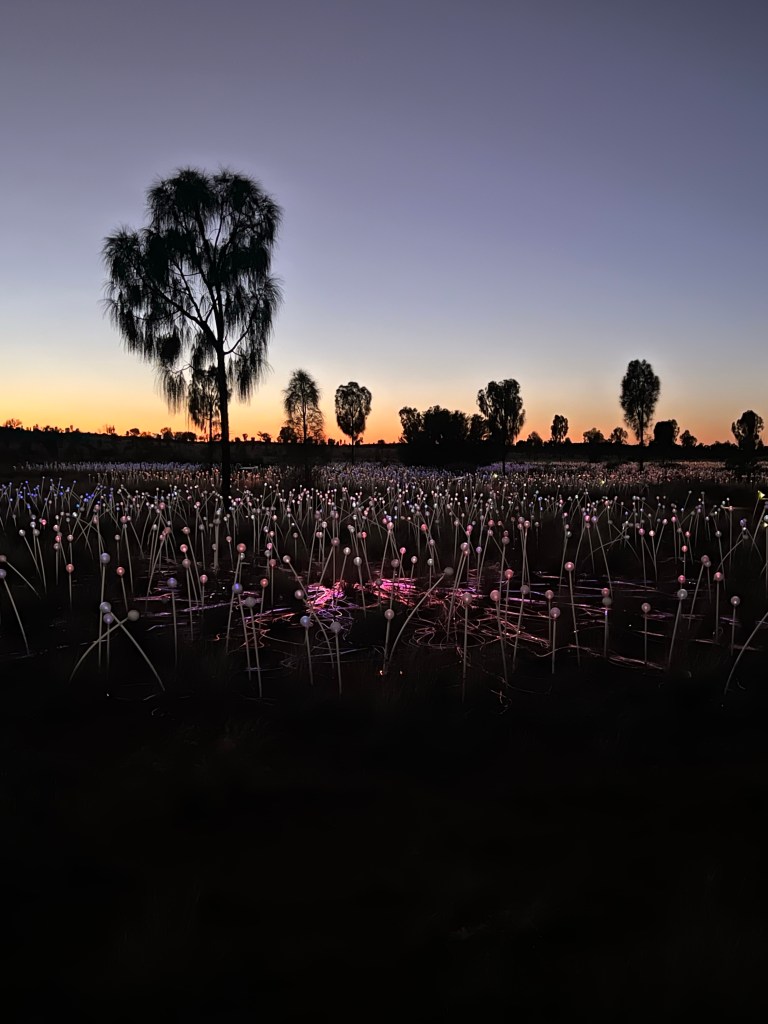
I felt that connection that artist Bruno Munro wanted us to experience: a connection to something bigger than our lives. Just like those lights, our lives exude brilliance for a time and then, dim and fade. While shining bright, we are intertwined, making something even more spectacular together than one single light. However, generations of light will come and go, all just a minute in the span of the time of Uluru.
But the sun still arises at Uluru.
And the beauty continues.
 Embracing Second Half Wonders